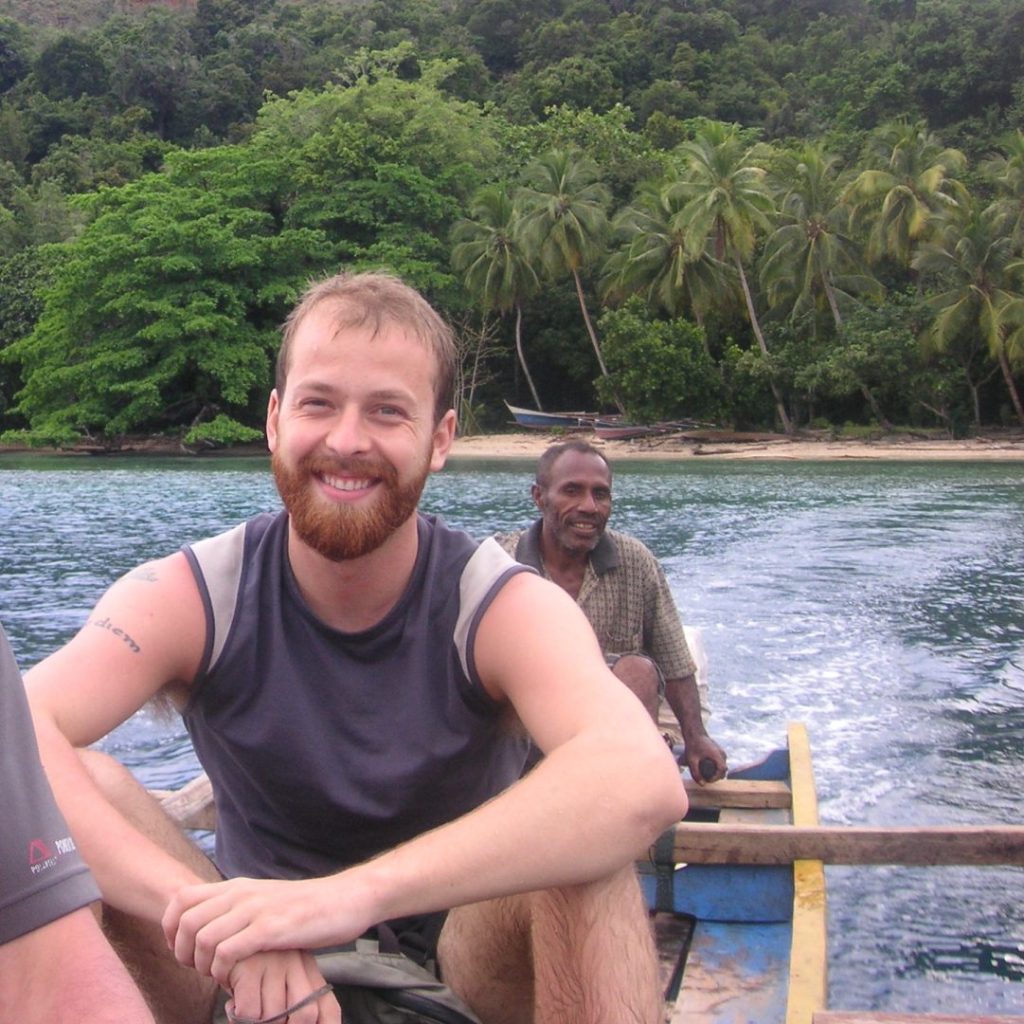
Twenty years ago I survived an earthquake and volcanic eruption at the same time.
I had been living in Jogjakarta, Indonesia for the past few months, studying to build fluency in Indonesian. I was looking forward to spending the next year and a half working for an amazing human rights organization, and being able to operate professionally in the national language was essential. But for all the beautiful sites, fascinating culture, and amazing food, what was on my mind more than anything was that one of the world’s most active volcanoes was slowly erupting, some 30 kilometers away. Mount Merapi had been active for the past couple of months, dribbling out some lava here and there, which was visible from my balcony. The past week or two though, it seemed to be slowing and the risk to the few million of us living nearby, including tens of thousands who live on the mountain or in its shadow, was apparently dissipating.
It was under this uncomfortable but easing atmosphere that some language school friends hosted a party on the evening of Friday, May 26, 2006. The party was called the “I Survived Mount Merapi Party” and it was attended by people from at least eight countries. After the party a few of us ended up at the Bintang Bar near our homes to close out the night, and I think I probably got into bed around 3am. It was a great evening, and I wish I remembered more of it, but the events of the next day and following weeks would cloud just about everything else in my memories from that time.
The next morning came early. Blinking, groggy, and a bit hungover, something startled me enough to wake up a few minutes before 6am. It took just a few seconds for me to realize that something was wrong and that I needed to get up, and fast. My bed, surreally, was moving back and forth and screeching over the floor as it did. When I got out of bed I couldn’t find my balance. The world was moving beneath my feet. It took another few seconds to get my balance and bearings, and to realize that this was something a boy from the heart of the prairies isn’t likely to ever experience. It was an earthquake. A big one. And it lasted for 65 frightening seconds as I stood in my balcony doorway heeding some outdated advice I must have learned as a kid.
There is nothing quite like losing your balance. Even falling from a short height can be frightening for some. When there is no way to catch your balance because the entire world seems out of balance it is even more disconcerting. I remember running to my balcony doorframe. I can still see the slanted ground as I fought to stay up and get to something to help me keep my balance. The remaining 45 seconds or so I spent, arms outstretched, pushing out on the doorframe, were the longest seconds of my life. And then it was done. It just stopped. It took me another couple of minutes before I had the guts to run to and then down the stairs outside.
At the time though, I and probably everyone else thought we were experiencing the effects of the volcano 30kms to the north. People fled the mountain and there was pandemonium all around. It didn’t take too long for the news to come out on the radio that this was not the volcano erupting 30kms to the north. It was actually an earthquake just inland from the coast, centred about 20kms to the south. This led to even more fear as people began to flee away from the coast and to higher ground out of fear of a tsunami, this being less than 18 months after the devastating Boxing Day tsunami that destroyed cities in multiple countries. There was no tsunami, the epicentre of the earthquake was just inland, but the damage was immense from this quake of 6.4 on the Richter Scale.
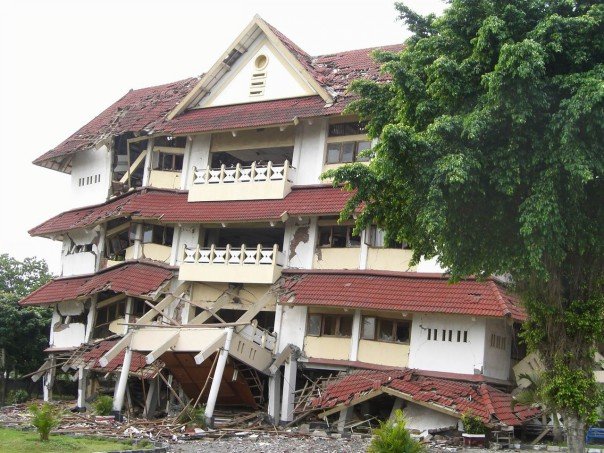
In the area I lived, few were hurt and the damage was limited primarily to broken windows and cracks in buildings. It was a big deal, but not that big a deal, based on what our area looked like. Which was a good thing as my community was one of the most densely populated areas in the world. However, in other areas, buildings and even entire villages were totally destroyed. Nearly 6,000 were killed and more than a million were left homeless in an area covering just a few hundred square kilometers. More people than lived in my entire province at the time lost their homes and so many more were impacted.
After connecting with some friends in the area and ensuring people around us were alright, a few of us went to a local hospital where we helped with whatever we could. Every couple of minutes a truck would arrive and drop off a handful more severely injured and sometimes already dead people. It was horrible but I had never seen people come together and act in such a way, in such a short time.
That night we slept in a courtyard with a few hundred of our neighbours and the next day I toured around affected areas and saw a small sample of the destruction. The disaster was natural, but the impact was at least partially human. Poverty mixed with shoddy construction caused a lot of the deaths. Brick mortar that had too much sand added to keep structural integrity. Walls that were not properly secured. Cheaply built, more “modern” homes crumbled while traditional bamboo homes stayed standing. People died in their homes and others died from going outside and having their homes’ wall collapse on top of them. While it was a big and devastating earthquake, and it lasted 2-3 times as long as a typical earthquake, stronger ones hit Japan frequently including four in the past 10 months with few or no casualties.
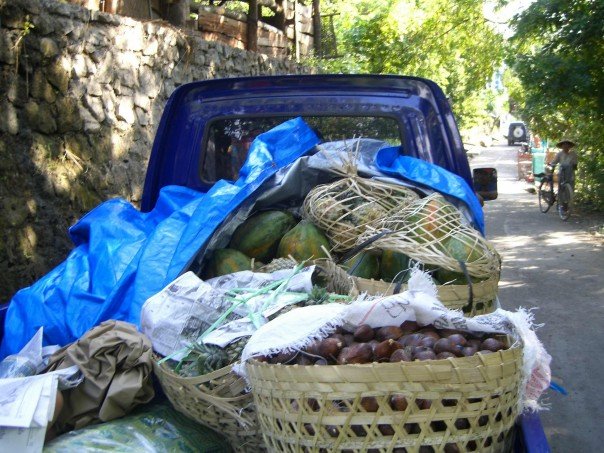
While the phones were down for quite a while, eventually we were able to communicate within a few hours of the quake. I had a few friends that were impacted, including one who lost their house and another who lost a close family member. When I asked how I could help, they asked for tarps, blankets, and medicine. So the second evening after the earthquake, we went out and spent all the money I could take out of the bank. We bought supplies and brought them to my friend Totok’s village, where every home was damaged and many had collapsed. This started a six-week aid effort that we organized under the facetiously named Mediocre Crisis Response Team. Every day after that, until I left Jogjakarta in July, except for a couple when I fought some nasty food poisoning, we rented a truck and driver and brought food, toys, medicine, tarps, blankets, and other necessities to villages. We raised more than $10,000 from donors in several countries, without the promise of a tax receipt, mostly on my word, and at a time when transferring money to Indonesia was much more complex than today. We were able to reach some communities long before the large aid organizations and 100% of proceeds we raised went to people who needed help. Our group was a core of five people who went out almost every day: two Canadians, two Indonesians, and an Australian, with a rotating group of another dozen or so people who joined to help when they could.
There are few periods of my life that taught me more appreciation and humility than those six weeks. I was studying for eight hours a day and then organizing aid runs throughout the evening. We suffered through frequent aftershocks and still some volcanic activity, including the largest eruption of that period, just two weeks after the earthquake. I saw people soldier on after losing their homes and loved ones. I saw the best of humanity in the worst of times for so many. And most of all, I saw perseverance.
Six weeks or so after the earthquake I left to begin my work with Peace Brigades International. First in Jakarta, and then for a year in Papua province. Less than two weeks after I arrived in Papua there was an earthquake, but just a “small” one. Around 5.0 on the Richter Scale, if I recall correctly. Smaller than one or two of the aftershocks from the Jogjakarta earthquake, but still scary.
20 years on, I still often think of that time in my life. I was in Indonesia for nearly two years with the purpose of working for PBI and that mattered deeply to me. But the earthquake, the weeks that followed, and then meeting my wife just before I left ended up shaping my life in even bigger ways. I went there to do one kind of work and came away having learned lessons and with experiences, both horrifying and elating, that I never could have expected. I saw what people are capable of when things fall apart, I saw community, I saw love. I saw so much fragility at the same time as so much strength. That experience has stayed with me in ways I don’t think will ever really leave.