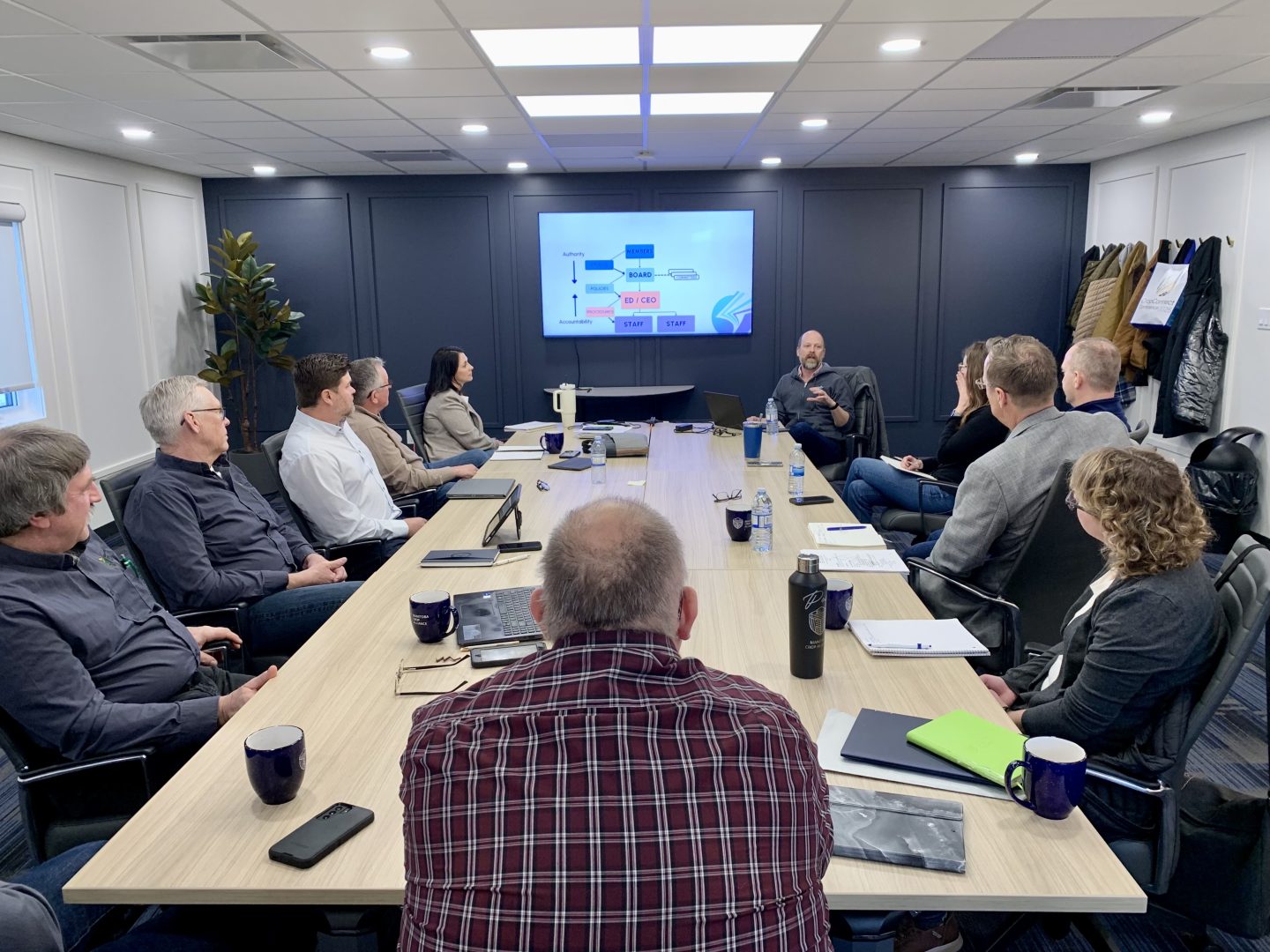
Boards of Directors are pretty weird when you think about it. A group of five or eight, or maybe 15 people, usually strangers, are thrown into a room together and asked to make major decisions about budgets, policy, and strategic direction. They oversee the organization’s senior executive and can be held legally liable for decisions they make and actions taken by the organization. And they do it in a couple of after-hours meetings a month, often with limited experience in the very things they’re being asked to govern.
And they typically do this without any real board governance training.
That gap has real consequences. When board members don’t share a common understanding of governance basics (what the board is accountable for, what belongs to management, and how decisions should be made), boards tend to drift into either micromanagement or disengagement. Training helps close that gap by giving directors a common framework and language, so meetings are more focused, questions are sharper, and oversight is more consistent.
It also supports better risk management and compliance: directors are expected to understand their fiduciary and legal duties, and education helps boards recognize red flags earlier and make more informed decisions, ideally before a crisis forces the issue.
Good governance training isn’t just about (or even primarily about) teaching technical skills in finance, policy, or strategy. It’s about defining the role of the board, clarifying the responsibilities of individual board members, building healthy working relationships, setting norms, and getting everyone on the same page about what the board should be doing, and how it should be doing it.
Who benefits most? New directors going through board orientation, chairs who want sharper meetings, and executive directors onboarding a refreshed board. Nonprofit boards across Canada are the bulk of who we work with, but the same fundamentals apply to co-ops, associations, and public-sector boards.
The board is a single entity that makes decisions and takes actions collectively. For that to work, every board member needs a shared understanding of the board’s purpose and how to contribute effectively. That’s why we recommend boards train together: to build shared skills, expectations, and ways of working. Ideally, board members bring diverse backgrounds, experiences, and expertise. Along with a healthy dose of independence, that diversity helps the board do its job: provide oversight, ensure compliance, and manage risk. But diversity only becomes a true strength when everyone is aligned on the board’s role and how to work well together.
If you want a board that’s more confident, more cohesive, and better equipped to do the job, training is one of the highest-leverage investments you can make. Governance Guru trainings cover a wide range of topics, including board financial oversight, effective chairing, and policy development. But the first class we almost always recommend is our Introduction to Board Governance (Level I) workshop. It covers the basics of good governance: what the board does (and shouldn’t do), the legal responsibilities of board members, board culture, and board structure.
In the more than 250 versions of this program we’ve run for organizations across Canada, every single participant, no matter their level of board experience, has walked away with at least a few new insights into how effective boards operate. And every board has come out stronger and more cohesive.
Governance Guru trainings are always tailored to your board and organization, and we integrate examples from your real context directly into the workshop. Sessions can run from as short as 90 minutes (condensed) to multiple days, depending on the board’s needs and individual board member capacity. We can align with your goals, and usually your budget, as well. But a three-hour session is almost always the best place to start — long enough to cover the core material, short enough to fit into a single board evening or a Saturday morning. Sessions can be delivered in person anywhere in Canada or live online, and every participant leaves with a workbook and reference materials they can return to later.
At the end of the day, governance isn’t something boards should have to figure out as they go. Shared training pays off in clearer roles, better conversations, and stronger decisions especially when the stakes are high. Investing in the board shows appreciation for both the importance of the role of board member and the individual volunteers. If you’re ready to set your board up for success, book a board governance training consultation today to find out how we can help your board be better.